

FAQ-- Product Resources


Itchy After a Shower? Lotion May Not Be the Real Solution
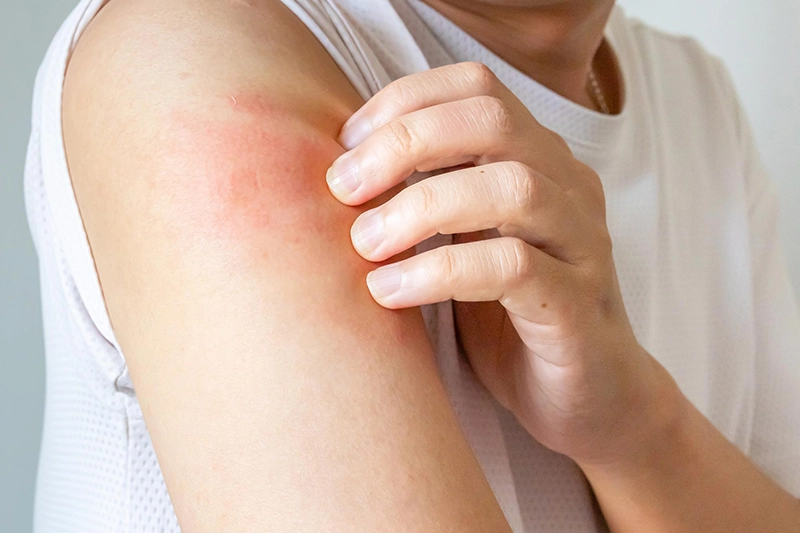
Many people experience dry, itchy skin after showering, especially during winter. Naturally, the first reaction is to change body lotion — but in many cases, the lotion is not the real problem.
The issue often starts before you step out of the shower.
Why Does Skin Feel Dry and Itchy After Showering?
Tap water is commonly treated with chlorine to kill bacteria and keep water safe. While effective for disinfection, chlorine also removes the skin’s natural protective oils.
When combined with hot water, this effect becomes stronger.
• Hot water opens skin pores
• Chlorine strips away natural lipids
• The skin barrier becomes weaker
• Moisture escapes more easily
As a result, the skin feels tight, dry, and itchy after showering.
Why Lotion Alone Often Doesn’t Work
Applying lotion after showering may feel helpful, but it does not fix the root cause. Think of the skin like a brick wall:
• The bricks are skin cells
• The mortar is the natural oil barrier
Chlorine creates tiny cracks in that wall. Lotion is like painting over cracks — it may look better temporarily, but moisture still escapes.
That is why many people feel relief for only a short time.
How to Address the Source of the Problem
Instead of treating symptoms, it is more effective to reduce chlorine exposure during the shower.
There are two common approaches, depending on space and budget.
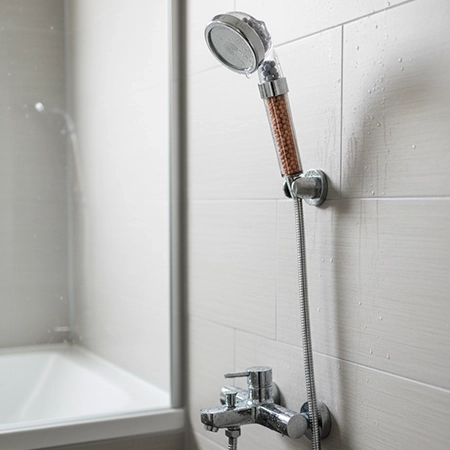
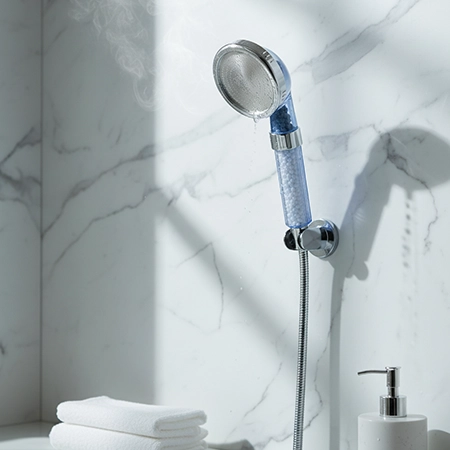
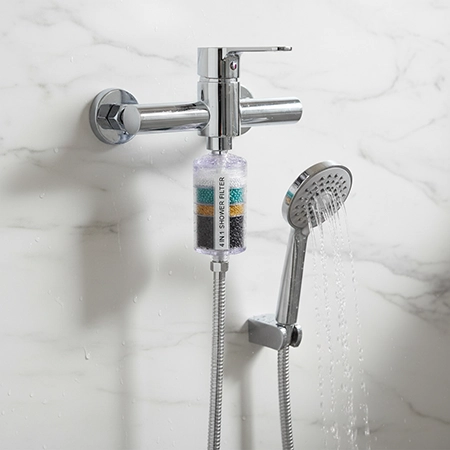
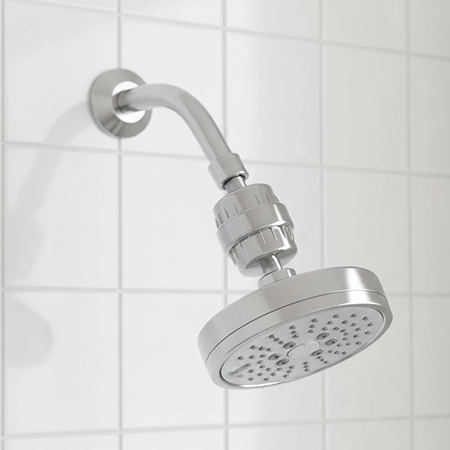
Option A: Shower Filter or Filtered Showerhead
Best for:
• Apartments
• Limited space
• Lower budget
A shower filter installs directly onto the shower connection and starts reducing chlorine immediately. No plumbing changes are required.
This option helps protect the skin barrier at the point of use.
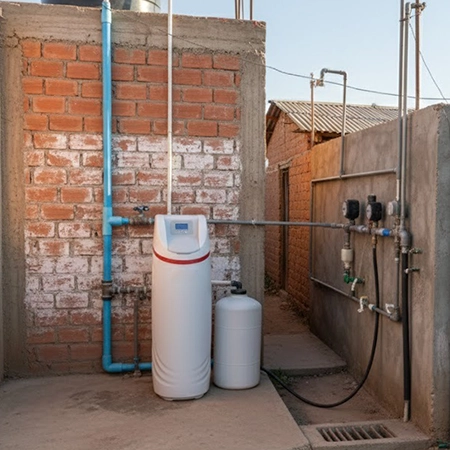
Option B: Whole-House Water Softener
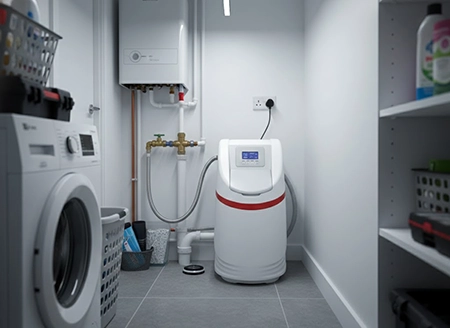
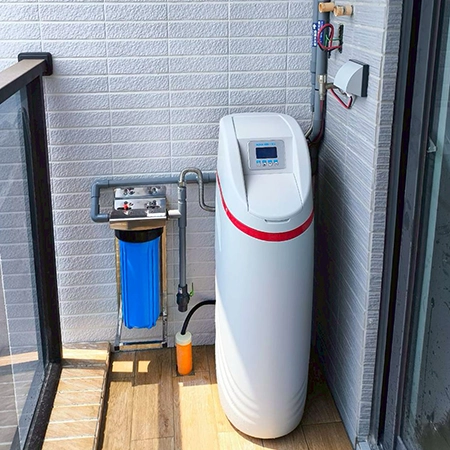
A whole-house water softener treats water before it reaches showers, taps, and appliances.
It works by:
• Reducing hardness minerals
• Improving water quality for bathing
• Helping protect plumbing and household equipment
Many users also notice:
• Softer-feeling skin
• Easier bathroom cleaning
• Better fabric condition after washing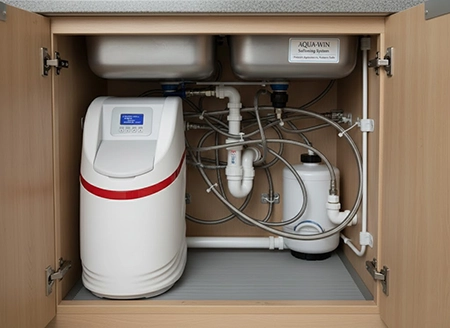
🚫Softened water is intended for bathing and household use, not drinking.🚫
Frequently Asked Questions
Do filters need replacing?
Yes.
• Shower filters are typically replaced every 3 months
• Water softener resin lasts 1–2 years
• Salt pellets are refilled based on water usage
Most systems include a display or indicator to guide maintenance.
Which option offers better long-term value?
For full-home protection, a whole-house system provides broader benefits. While the initial cost is higher, it helps reduce maintenance and appliance wear over time.
What if there is limited installation space?
In cases where space is restricted, compact softener models or shower-level filtration are practical alternatives.
Key Takeaway
Dry, itchy skin after showering is often caused by water quality, not skincare products.
Reducing chlorine exposure during bathing helps protect the skin’s natural barrier — making lotions more effective afterward, not the other way around.