

FAQ-- Product Resources


Is Pre-filtration Necessary?
Short answer: Yes—Pre-filtration is usually necessary—especially if you care about system performance, filter lifespan, and long-term operating costs.
⬇️Below is a simple, practical explanation based on real-world water system use.
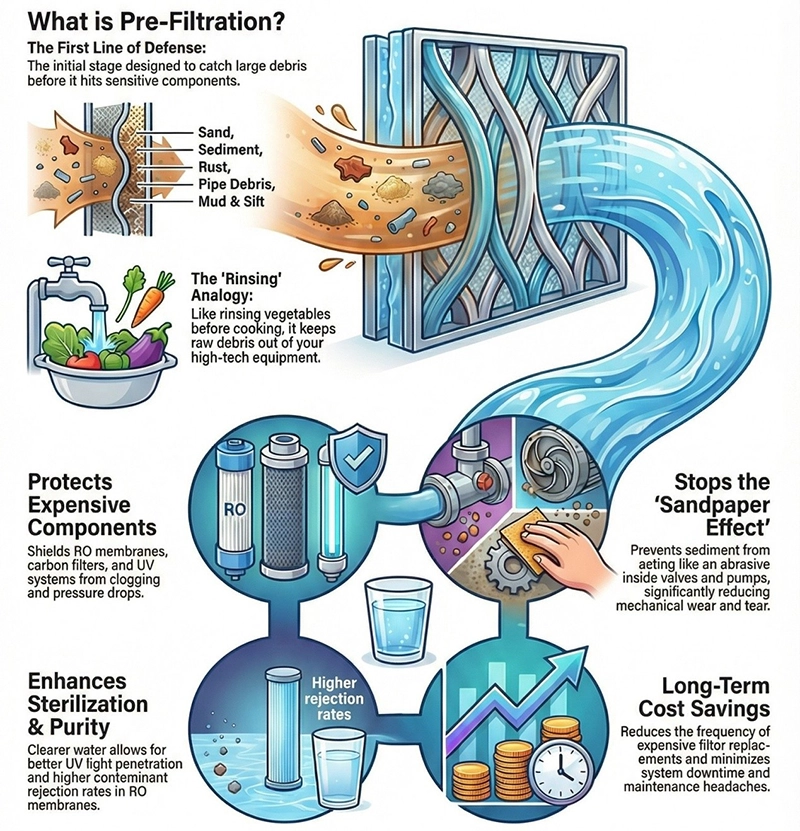
What is pre-filtration?
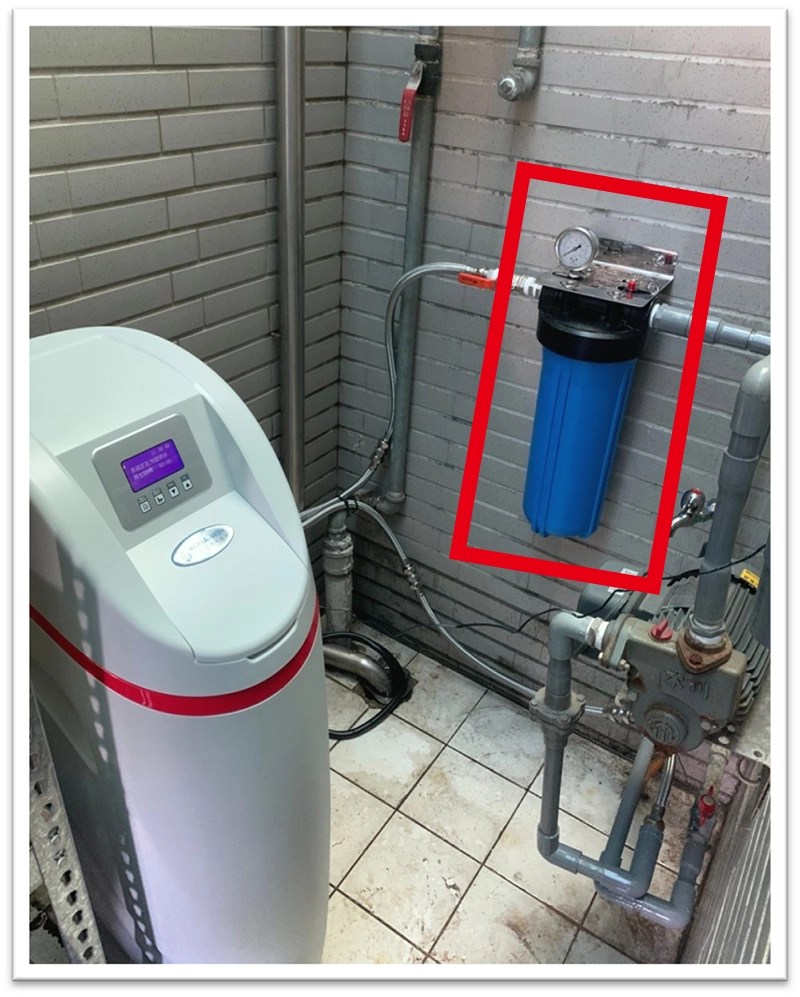
Pre-filtration is the first line of defense in a water treatment system.
Its main function is to remove larger particles before water reaches more sensitive filters or equipment.
Common things it removes:
• Sand & sediment
• Rust & pipe debris
• Mud, silt, visible particles
Think of it like rinsing vegetables before cooking—you wouldn’t want dirt going straight into the pan.
Why Pre-Filtration Matters?
1.Protects Expensive Filters and Equipment
RO membranes, carbon filters, UV systems, heaters, and chillers hate dirt.
Without pre-filtration:
• Filters clog faster
• Water Pressure drops
• Replacement frequency increases
➡️A cheap pre-filter protects expensive components.
2. Extends system lifespan
Sediment acts like sandpaper inside valves, pumps, and membranes.
With pre-filtration:
• Less wear and tear
• More stable water pressure
• Fewer service calls
3. Improves overall water quality
When large particles are removed first:
• Carbon works better
• RO membranes reject more contaminants
• UV sterilization becomes more effective (clear water = better UV penetration)
4. Saves money long-term
Even though pre-filtration is an extra step:
• Fewer filter replacements
• Less downtime
• Lower maintenance costs
It is a classic example of a small upfront investment with long-term benefits.
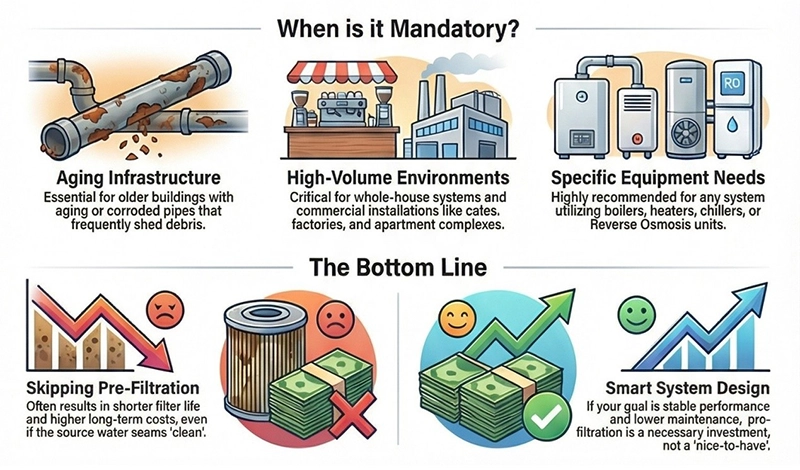
When is pre-filtration especially necessary?
✔ Old buildings with aging pipes
✔ Areas with sediment-heavy water
✔ Whole-house systems
✔ Commercial use (cafes, factories, apartments)
✔ Any RO, boiler, heater, or chiller system
Honestly? Most real-world water systems benefit from it.
In limited cases, such as:
⭕Very clean municipal water
⭕Simple, low-cost, short-term setups
Even then, skipping pre-filtration usually means shorter filter life.
Bottom line
Pre-filtration is not just a “nice-to-have” feature—it is smart system design.
If your goal is:
• Stable performance
• Better water quality
• Lower maintenance headaches
➡️Pre-filtration is worth it.
________________________________________
FAQ:
Q1: What is pre-filtration in a water treatment system?
Pre-filtration is the first filtration stage in a water treatment system.
Its purpose is to remove larger particles—such as sand, rust, and sediment—before water reaches more sensitive components like carbon filters, RO membranes, UV systems, or heaters.
Q2: Why is pre-filtration important for RO and filtration systems?
Pre-filtration helps protect downstream filters and equipment from clogging and damage.
By removing sediment early, it reduces pressure loss, extends filter lifespan, and improves the overall stability and performance of the system.
Q3: Does pre-filtration improve water quality, or just protect equipment?
It does both.
Removing large particles allows carbon filters to work more efficiently, improves RO membrane rejection rates, and enhances UV sterilization performance by keeping the water clearer for better UV penetration.
Q4: In what situations is pre-filtration especially necessary?
Pre-filtration is strongly recommended for:
• Older buildings with aging or rusty pipes
• Areas with sediment-heavy source water
• Whole-house water systems
• Commercial installations such as cafés, factories, and apartments
• Any system using RO membranes, boilers, heaters, or chillers
Most real-world water systems benefit from pre-filtration.
Q5: Can pre-filtration ever be skipped?
In limited cases—such as very clean municipal water or short-term, low-cost setups—it may be possible to skip pre-filtration.
However, doing so usually results in shorter filter life, more frequent maintenance, and higher long-term operating costs.